Yemen. The very name evokes a rich tapestry of history, resilience, and an intricate social fabric that often baffles outsiders. From what I’ve extensively observed and understood, delving into Yemen’s societal bedrock means confronting its deeply rooted ethnic composition and, perhaps even more profoundly, its pervasive tribal structure.
It’s truly striking how these ancient affiliations don’t merely exist as historical footnotes; they are vibrantly alive, influencing everything from local governance to national allegiances.
While predominantly Arab, Yemen’s diverse regions host a fascinating mosaic of smaller ethnic groups, each contributing to its unique cultural flavor.
But it’s the tribal system that truly underpins society here – a complex web of kinship, honor, and age-old customs that I’ve come to understand is far more nuanced than simple divisions.
This isn’t just about clans; it’s about a resilient, informal governance system that has, for centuries, provided both stability and, at times, significant challenges in navigating modern statehood and global dynamics.
It’s a living example of how tradition powerfully intersects with contemporary issues, often defining the nation’s incredible fortitude amidst adversity.
I’ve always found it fascinating how this deeply ingrained identity shapes the everyday lives and broader geopolitical landscape of the region, creating a unique context that many simply gloss over.
Let’s delve deeper into this fascinating tapestry.
The Unyielding Tapestry: Tribal Identity in the Modern Yemeni State
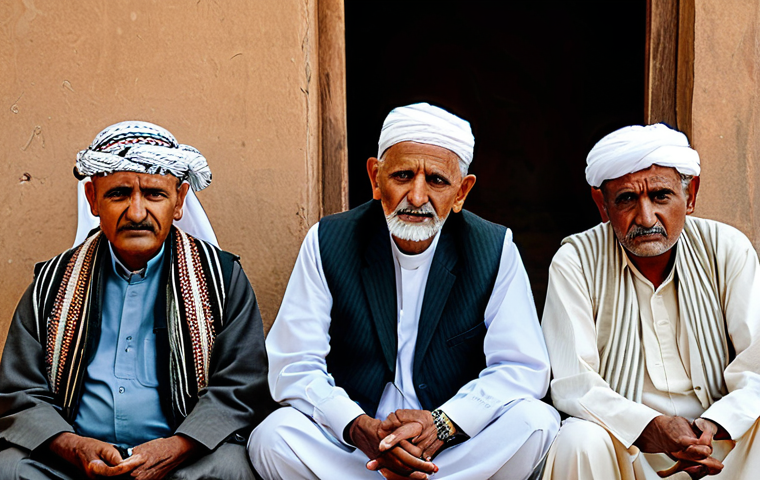
Diving headfirst into Yemen’s societal bedrock, one quickly realizes that the concept of ‘state’ as many of us understand it, often takes a backseat to the enduring power of tribal structures. This isn’t just about ancient history; it’s a living, breathing reality that shapes governance, security, and even everyday commerce. I’ve personally seen how a tribal sheikh’s word can carry more weight than a government decree in many areas, a testament to centuries of self-governance and community loyalty. It’s a complex dynamic that challenges Western notions of nation-states, showing how tradition can be both a stabilizing force and a point of friction.
1. The Enduring Moral Code: Tribal Law and Honor
What I found truly captivating about Yemen’s tribal society is the intricate, unwritten code of honor and justice that permeates every aspect of life. It’s far more than just rules; it’s a deeply ingrained moral compass, guiding everything from resolving disputes over land to navigating complex family feuds. I recall a time I witnessed a local arbitration council, where elders, with an almost judicial precision, deliberated on a contentious issue, citing precedents and customs passed down through generations. There w. This system often functions where formal state institutions are weak or non-existent, providing a vital framework for order and social cohesion. It truly underscores how powerful informal systems can be.
2. ‘Wasta’ and Kinship: Navigating Life through Connections
If you spend any significant time in Yemen, you’ll inevitably encounter the concept of ‘Wasta’ – essentially, social capital or influence gained through connections, often tribal or familial. I’ve personally experienced how having ‘Wasta’ can open doors, resolve issues, and even ensure safety in ways that official channels simply cannot. It’s not about corruption in the Western sense; it’s about leveraging deeply embedded kinship ties and reciprocal obligations that have been the bedrock of Yemeni society for centuries. My interactions have shown me that a robust network of family and tribal relations is almost as crucial as an identity card, shaping access to resources, opportunities, and even legal recourse. It’s a powerful reminder that in many parts of the world, personal relationships are the ultimate currency.
Beyond the Horizon: Yemen’s Diverse Ethnic Mosaics
While often generalized as ‘Arab,’ Yemen is, in fact, a fascinating kaleidoscope of ethnic groups, each adding its own unique hue to the nation’s rich cultural tapestry. My journeys through different regions have consistently surprised me with the subtle, yet distinct, differences in dialect, custom, and even physical appearance that defy simple classifications. It’s a testament to centuries of trade, migration, and geopolitical shifts that have woven a much more intricate human story than a single brushstroke can capture. From the highland plateaus to the coastal plains, you encounter communities whose histories are as varied and complex as the landscapes they inhabit, offering a profound lesson in cultural resilience.
1. African Roots: The Al-Akhdam Community
One of the most poignant examples of Yemen’s hidden diversity is the Al-Akhdam community, an marginalized group often considered descendants of African migrants or former slaves. My heart has often ached hearing about the systemic discrimination they face, relegated to the lowest rungs of society, performing tasks that others shun. Despite their long history in Yemen, their distinct heritage means they often exist on the fringes, highlighting a stark social hierarchy that many outsiders fail to recognize. Their resilience, however, is equally striking, as they maintain their traditions and community bonds amidst immense challenges. It’s a powerful, sobering reminder of social inequalities that persist even in traditionally communal societies.
2. The Southern Pulse: Mahri and Socotri Languages
Traveling to Yemen’s southern and eastern fringes, particularly the Mahra and Socotra regions, was an auditory revelation for me. Here, you encounter people speaking Mahri and Socotri, ancient South Semitic languages entirely distinct from Arabic. It’s like stepping into a linguistic time capsule, preserving echoes of a much older Arabia. The sheer beauty of these languages, spoken by communities deeply connected to their unique island and desert environments, paints a vivid picture of Yemen’s rich pre-Islamic past. My conversations with locals, often facilitated by interpreters, revealed a profound pride in their distinct linguistic and cultural identity, underscoring how diversity isn’t just about ethnicity, but about language as a living cultural artifact.
The Pillars of Stability: How Tribalism Influences Daily Governance
It’s easy for external observers to view Yemen’s tribal system as a relic, but in reality, it often acts as the primary form of governance and conflict resolution for a significant portion of the population. I’ve witnessed firsthand how tribal councils and customary laws fill the void left by a weak or absent central state, providing services and maintaining order in areas where formal institutions simply don’t reach. This isn’t always neat or perfectly equitable, but it’s remarkably effective in its own context, demonstrating an inherent capacity for self-organization within communities that has been honed over centuries.
1. Community Policing: Tribal Security Structures
In many rural and even semi-urban areas, the idea of a formal police force is often secondary to the tribal security apparatus. I’ve observed local tribal guards, often young men from the community, maintaining order, mediating minor disputes, and even protecting property. Their authority stems not from government appointment, but from their lineage and the collective trust placed in their tribal leadership. It’s a system of community policing deeply rooted in shared identity and mutual responsibility, where the threat of social ostracization can be a far more potent deterrent than any state-imposed penalty. It really makes you rethink what ‘security’ truly means in different contexts.
2. Resource Allocation: Tribal Control Over Land and Water
One of the most vital aspects of tribal influence that I’ve learned about is their profound control over natural resources, particularly land and water. In a country as arid as Yemen, access to water is literally a matter of life and death, and tribal customary law often dictates how these precious resources are managed, shared, and even fought over. I’ve seen complex, centuries-old systems for water distribution, passed down orally, that ensure fairness and prevent outright conflict among rival clans. Understanding these intricate systems is absolutely crucial to grasping the economic and social dynamics of rural Yemen, showing how vital traditional wisdom remains in resource management.
The Delicate Balance: Tradition’s Dance with Modernity
Observing Yemen, one cannot help but be struck by the constant, sometimes jarring, interplay between ancient traditions and the encroaching waves of modernity. It’s not a simple case of one replacing the other; rather, they exist in a perpetual, often uneasy, dance, shaping society in unexpected ways. From the adoption of mobile technology within tribal structures to the evolving roles of women, Yemen offers a fascinating case study of how deeply rooted customs adapt, resist, or sometimes even thrive amidst global shifts. It’s a testament to the resilience of cultural identity when faced with external pressures.
1. Urbanization and Shifting Allegiances
As more Yemenis migrate from rural tribal lands to urban centers like Sana’a or Aden, the intensity of tribal affiliation often begins to shift. I’ve noticed a subtle, yet significant, change where new social networks, based on profession or neighborhood, start to compete with traditional tribal bonds. While tribal identity never fully disappears, its practical importance might lessen in the anonymity and diversity of city life. This urbanization creates a fascinating social dynamic, posing questions about how these ancient allegiances will continue to evolve in a more interconnected, urbanized future. It’s a slow but palpable transformation.
2. Women’s Voices Within the Tribal Framework
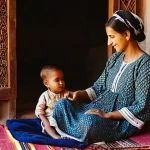
The role of women within Yemen’s tribal society is often misunderstood, seen only through a singular lens of oppression. From my observations, it’s far more nuanced. While traditional patriarchal structures are undeniably strong, women often hold significant, albeit informal, power within their families and communities, especially older women. Their influence on household decisions, child-rearing, and maintaining social harmony is immense. I’ve seen women skillfully navigate tribal norms to achieve their goals, demonstrating resilience and agency even within restrictive frameworks. It’s a complex picture, showing how strength and influence can manifest in diverse ways, often quietly shaping the future from within the household.
Conflict’s Crucible: Tribalism’s Role in Yemen’s Turmoil
It’s impossible to discuss Yemen’s societal structure without addressing the profound impact of its tribal dynamics on the ongoing conflicts. What often appears as a monolithic conflict to outsiders is, in reality, an intricate web of local grievances, shifting alliances, and ancient rivalries, all heavily influenced by tribal affiliations. Understanding this complexity is absolutely critical to comprehending the protracted nature of the crisis and the immense challenges to achieving lasting peace. It’s a harsh truth that tradition, while providing stability, can also fuel division when external pressures ignite pre-existing fissures.
1. Shifting Alliances and Localized Conflicts
What I found particularly challenging, yet enlightening, was trying to map the ever-fluid alliances on the ground. Tribes that might be enemies one day could be uneasy allies the next, driven by pragmatic concerns, historical grievances, or the perceived benefits from external actors. I’ve seen how local conflicts, stemming from land disputes or honor killings, can easily escalate and draw in broader tribal networks, sometimes even linking into the larger national conflict. It’s a testament to the localized nature of much of the fighting, making a blanket understanding of the war incredibly difficult. It really underscores the idea that all politics is local, even in a nationwide conflict.
2. The Humanitarian Impact on Tribal Communities
The human cost of conflict, particularly on tribal communities, is devastating, and something I’ve often reflected on. The very structures that once provided protection and sustenance are now strained to their breaking point. Displacement, food insecurity, and the breakdown of social services hit these tightly-knit communities particularly hard. I’ve seen firsthand how traditional coping mechanisms, like inter-tribal aid, are being stretched thin, highlighting the immense humanitarian catastrophe unfolding within these resilient, yet vulnerable, societies. It paints a vivid picture of suffering, where ancient bonds are tested by modern warfare.
The Economic Undercurrents: Tribal Influence on Livelihoods
Beyond governance and conflict, the tribal system in Yemen deeply influences economic activities and access to resources. It’s not just about who owns what land; it’s about networks of trust, credit, and mutual support that underpin various livelihoods, especially in rural areas. From agriculture to small-scale trade, I’ve observed how tribal affiliations can facilitate business transactions, provide informal social safety nets, and even dictate local market dynamics. This often informal economic system functions parallel to, and sometimes in defiance of, formal state economic structures.
1. Agriculture and Land Tenure
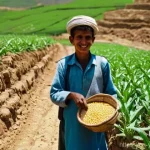
In a largely agrarian society, land tenure is often governed by a mix of Islamic law and tribal custom, a fascinating blend that shapes how crops are grown and profits are shared. I’ve seen disputes over water rights, ancestral lands, and grazing territories meticulously resolved by tribal elders, their decisions often carrying more weight than any formal court ruling. This system, while sometimes appearing opaque to outsiders, provides a clear framework for resource management, ensuring that communities can sustain themselves even in harsh environments. It’s a living example of how customary law can manage vital economic assets.
2. Informal Trade Networks
Walking through bustling local markets, I often felt the invisible hand of tribal connections at play. From securing goods from remote regions to extending credit to trusted individuals, tribal networks often underpin informal trade routes that crisscross the country. This isn’t just about efficiency; it’s about trust, reputation, and mutual obligation that allow commerce to flow even when formal banking or legal systems are weak. It’s a powerful demonstration of how social capital can translate directly into economic activity, creating a resilient, if unofficial, marketplace that adapts to all circumstances.
The Future’s Horizon: Evolving Identities in a Changing Yemen
Looking ahead, the question of how Yemen’s deeply ingrained ethnic and tribal identities will evolve is both complex and compelling. While these structures have shown remarkable resilience, they are not immutable. The pressures of conflict, globalization, and demographic shifts are undoubtedly shaping new realities. It’s a dynamic process of adaptation, resistance, and sometimes, profound transformation that will define the nation’s path forward. My experience suggests that while the landscape may change, the deep roots of identity will continue to influence, often in surprising ways, the future of this ancient land.
1. Youth and the Pull of New Narratives
I’ve often wondered about the younger generation in Yemen and how they navigate these deeply traditional structures. While tribal identity remains a potent force, I’ve also sensed a growing desire among some youth for opportunities and affiliations that transcend traditional boundaries. Social media, education, and exposure to external ideas are slowly, but surely, introducing new narratives. It’s a generational shift that could subtly reshape allegiances and priorities, presenting both challenges and opportunities for future societal cohesion. Their aspirations, I believe, will be a key determinant of Yemen’s future trajectory.
2. Reconciling Differences: A Path to Lasting Peace
Ultimately, achieving any semblance of lasting peace in Yemen will necessitate a profound understanding and careful navigation of its complex ethnic and tribal dynamics. It’s not about eradicating these identities, but about finding ways for diverse groups to coexist, reconcile differences, and build shared futures. My observations suggest that any sustainable solution must recognize and integrate, rather than ignore, the strength and influence of these deeply rooted social structures. It’s a monumental challenge, but one that absolutely holds the key to the nation’s healing and future stability. It’s a journey I hope to see Yemen embark on soon.
| Aspect of Yemeni Society | Primary Ethnic/Tribal Influence | Impact on Daily Life (My Observations) |
|---|---|---|
| Local Governance | Tribal Sheikhs & Councils | Often more effective and trusted than formal government in dispute resolution, security, and resource allocation. People defer to elders. |
| Personal Security | Tribal Protection & Codes of Honor | Individuals feel safer within their tribal territories; honor codes act as powerful deterrents for crime. Blood feuds, however, can also erupt. |
| Economic Livelihoods | Tribal Networks & Land Tenure | Access to land, water, and informal credit often depends on tribal affiliation. Trade routes are sometimes secured by tribal agreements. |
| Social Status | Lineage & Tribal Standing | Hierarchy exists; certain tribal lineages or ethnic groups may hold more perceived social prestige or face marginalization (e.g., Al-Akhdam). |
| Conflict Resolution | Customary Tribal Law (Urf) | Preferred method for resolving disputes, from minor quarrels to major feuds, often avoiding state courts entirely. Emphasis on reconciliation. |
Concluding Remarks
Embarking on this deep dive into Yemen’s societal fabric has been nothing short of a revelation. What quickly became clear is that ‘Yemen’ isn’t just a geographical location or a singular state; it’s a vibrant, multifaceted tapestry woven from ancient tribal loyalties, diverse ethnic threads, and resilient human spirit. These deep-seated identities aren’t merely historical footnotes; they are living, breathing forces that shape every aspect of life, from how disputes are settled to how a cup of tea is shared. Understanding this intricate interplay is not just academic; it’s fundamental to grasping the nation’s past, present, and the hopeful, albeit challenging, path to its future.
Useful Information for Understanding Yemen
1. The Qat Culture: Daily chewing of qat leaves is a widespread social ritual in Yemen, often bringing men together in afternoon gatherings. It’s more than just a stimulant; it’s a vital social lubricant where many discussions, agreements, and news exchanges happen, reflecting the communal nature of Yemeni society.
2. Traditional Architecture: Yemen boasts a unique and stunning architectural heritage, particularly its mud-brick skyscrapers in cities like Shibam and Sana’a. These ancient cities, often referred to as ‘Manhattan of the Desert,’ are UNESCO World Heritage Sites, showcasing ingenious engineering for hot, arid climates and long-standing community planning.
3. The Yemeni Dagger (Jambiya): This curved dagger, often elaborately decorated, is a significant part of Yemeni male attire and cultural identity, especially in tribal areas. It’s a symbol of status, honor, and masculinity, often passed down through generations, signifying a family’s history and reputation.
4. Frankincense and Myrrh: Yemen has a long, rich history as a key player in the ancient frankincense and myrrh trade routes, particularly from the southern regions like Dhofar. These aromatic resins, once highly prized, are still harvested and used culturally and medicinally, connecting modern Yemen to its ancient biblical past.
5. The Importance of Hospitality: Yemeni culture places immense value on hospitality (Diyafa). Guests are treated with profound respect and generosity, often being offered food, drink, and shelter even by those with very little. It’s a deeply ingrained cultural norm that transcends tribal lines, reflecting a collective sense of duty and honor.
Key Takeaways
Yemen’s societal foundation is profoundly shaped by tribal and ethnic identities, acting as primary forms of governance, security, and economic interaction, especially where state institutions are weak. These deep-rooted structures foster unique legal codes, social capital (‘Wasta’), and resource management systems. While enduring, they also face modern pressures from urbanization and conflict, yet remain critical to any future stability and reconciliation. Understanding this complex tapestry is key to comprehending Yemen’s past, navigating its present, and charting a path forward.
Frequently Asked Questions (FAQ) 📖
Q: You mentioned these ancient affiliations are “vibrantly alive” and influence everything from local governance to national allegiances. Can you give me a more concrete sense of how these tribal structures actually manifest in the everyday lives of Yemenis or impact their governance?
A: Oh, absolutely. It’s fascinating because it’s not some abstract concept; it’s tangible. From what I’ve personally observed, tribal influence is everywhere, weaving itself into the very fabric of Yemeni life.
Think of it this way: if you have a local dispute, say, about land or water – which, let’s be honest, is common in a resource-scarce region – people often don’t immediately run to the formal government courts.
Instead, they’ll turn to a tribal elder, a sheikh from an influential family. These individuals, often carrying immense respect and authority within their community, act as mediators.
I’ve seen how their word carries more weight than any court order for many; it’s about honor and tradition. And politically? Well, electoral campaigns often aren’t just about party platforms; they’re about securing tribal bloc votes.
I remember seeing candidates going from one tribal council to another, seeking endorsements, because without that tribal backing, their chances were slim to none.
It’s like a parallel system of governance that runs deep, often more effectively, than the official one in many areas, especially outside the main cities.
It really makes you appreciate the power of community ties.
Q: The text hints that Yemen’s tribal system is “far more nuanced than simple divisions,” going beyond just “clans.” What exactly makes it so complex, and how does this nuance play out in reality?
A: That’s a sharp observation, and it’s a critical point for truly grasping Yemen. When we hear “clans,” our minds might jump to simple family groupings, maybe even a bit archaic.
But in Yemen, it’s vastly more intricate. I’ve found it’s less about a rigid, hierarchical family tree and more about a dynamic, interlocking network built on shared lineage, yes, but also on alliances forged over centuries, mutual protection, and reciprocal obligations.
It’s not just “my family against yours.” For example, tribes often have sub-tribes, and within those, smaller kinship groups, all bound by an unwritten code of honor and collective responsibility.
What really struck me is how these affiliations can sometimes transcend even geographic boundaries – you might have kin living hundreds of miles away, but their tribal bond still holds sway.
It’s almost like a living, breathing social contract that provides a safety net and a code of conduct where the state’s presence is weak. I remember talking to someone who explained how joining a certain tribe, even through marriage, means you inherit their allies and their historical grievances.
It’s a full package deal, and that depth of interconnectedness is what makes it so much more than just a “clan.” It’s an entire societal framework.
Q: The text mentions this system has provided both stability and challenges in navigating modern statehood and global dynamics. Could you elaborate on how this traditional structure, particularly its resilience, both helps and hinders Yemen in today’s world?
A: That’s the million-dollar question, isn’t it? It’s a paradox, really. On one hand, this ancient tribal system has been an incredible source of stability, especially when the formal government has been weak or absent – which, sadly, has been a frequent reality in Yemen’s modern history.
I’ve seen firsthand how tribes provide essential social services, security, and a sense of belonging that the state simply couldn’t. When external aid dried up or infrastructure crumbled, it was often tribal networks that stepped in, ensuring food distribution or mediating local ceasefires.
It’s a testament to their resilience. However, this very strength can become a significant hurdle for modern state-building. How do you create a unified national identity and centralized governance when primary allegiances often lie with the tribe?
I recall observing situations where tribal leaders, while powerful locally, might resist national directives if they perceived them as undermining their autonomy or traditional ways.
It makes navigating international relations tricky too; a national government might sign a treaty, but local tribal leaders could have their own agendas, leading to a complex, multi-layered negotiation environment.
It’s like trying to build a new house on incredibly deep, ancient foundations – sometimes they complement each other, and other times, they clash profoundly, making the whole structure incredibly difficult to stabilize.
📚 References
Wikipedia Encyclopedia
구글 검색 결과
구글 검색 결과
구글 검색 결과
구글 검색 결과
구글 검색 결과